
This month, I had the opportunity to collaborate on an extensive team project, building upon the level design principles I acquired in the previous month. Additionally, I was able to enhance my blockmesh design skills and transform it into a finalized game version. While team collaboration can sometimes pose challenges, I was eager to engage in such an experience and contribute to a larger project. Fortunately, I had the chance to collaborate with a few members from a prior team, which added a sense of familiarity. The primary goal of this project was to take a blockmesh level, infuse it with our creative vision, integrate it into a unified and persistent level, establish connections between different levels, and comprehensively implement static mesh actors and assets to complete the level as a fully playable game. Each team member was responsible for their individual level, ensuring its seamless connection to the subsequent level.
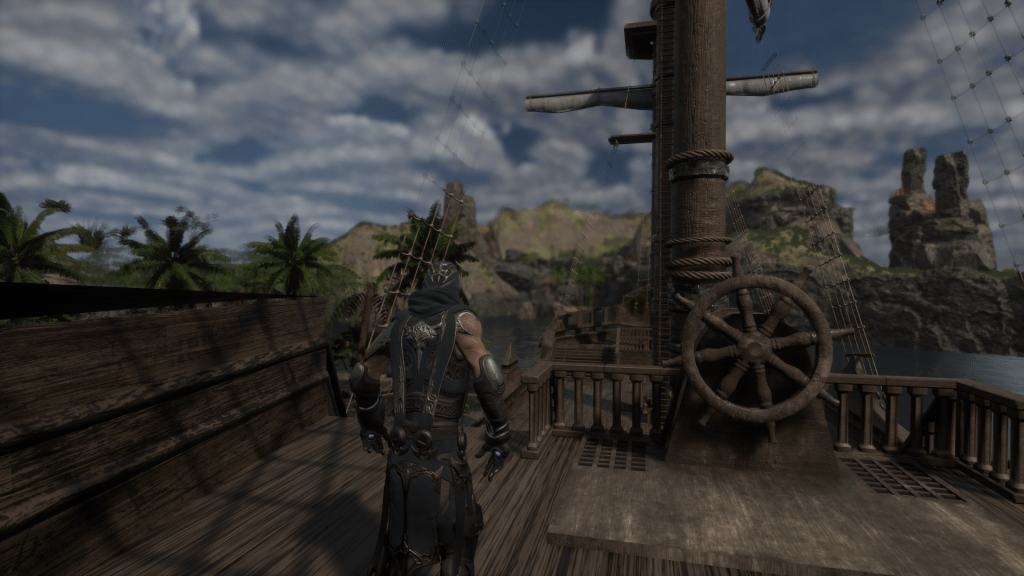
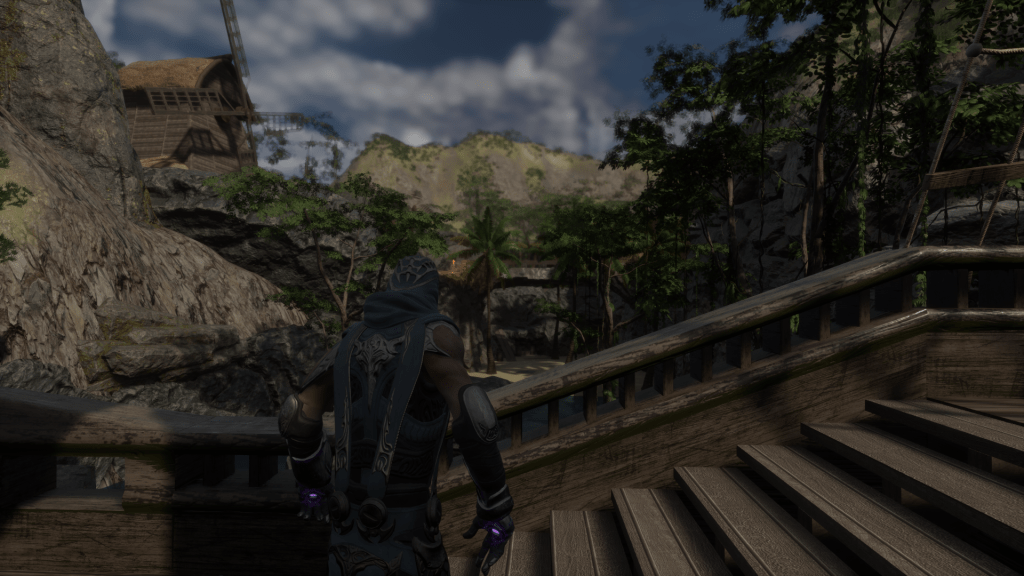
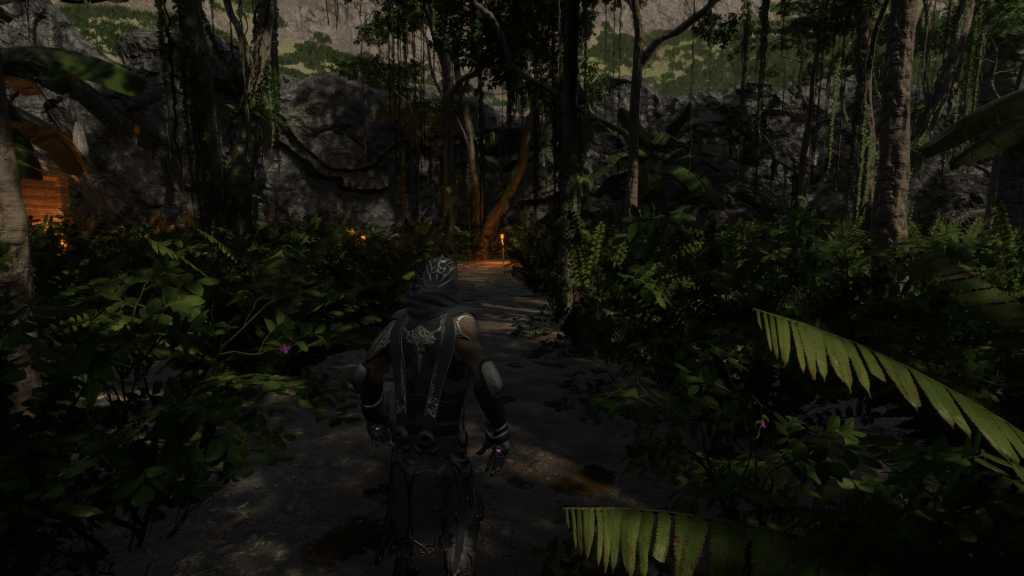
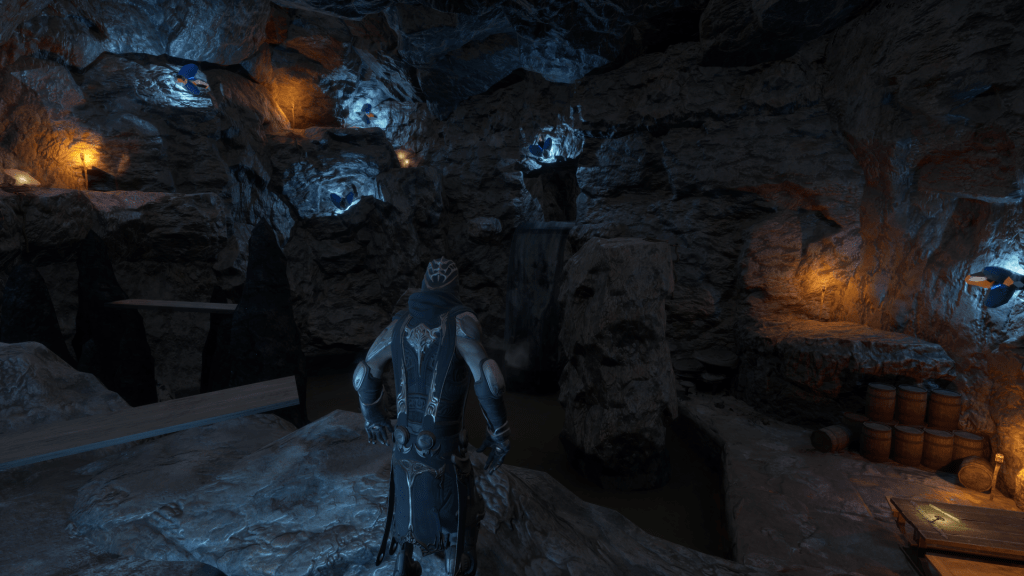
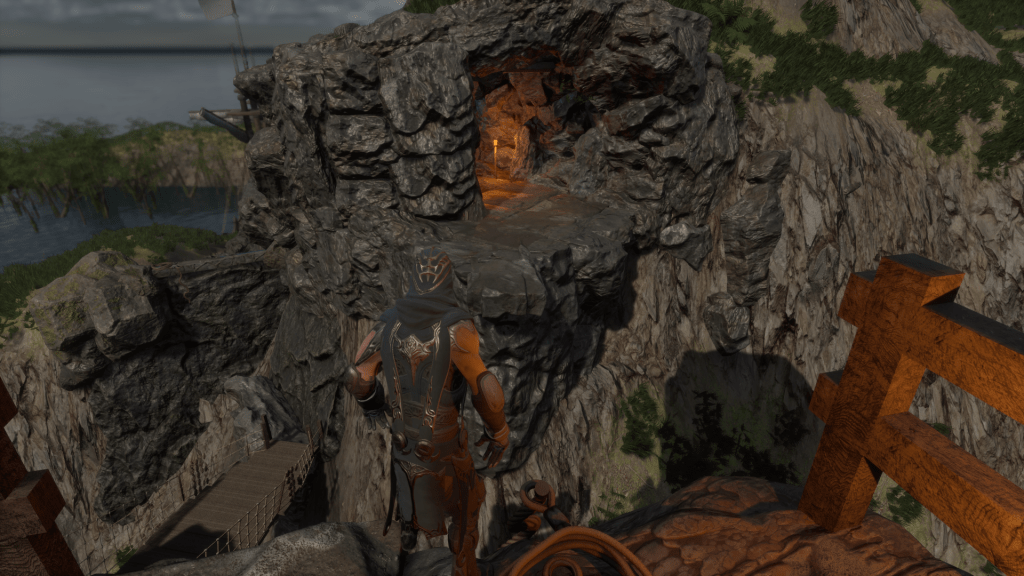
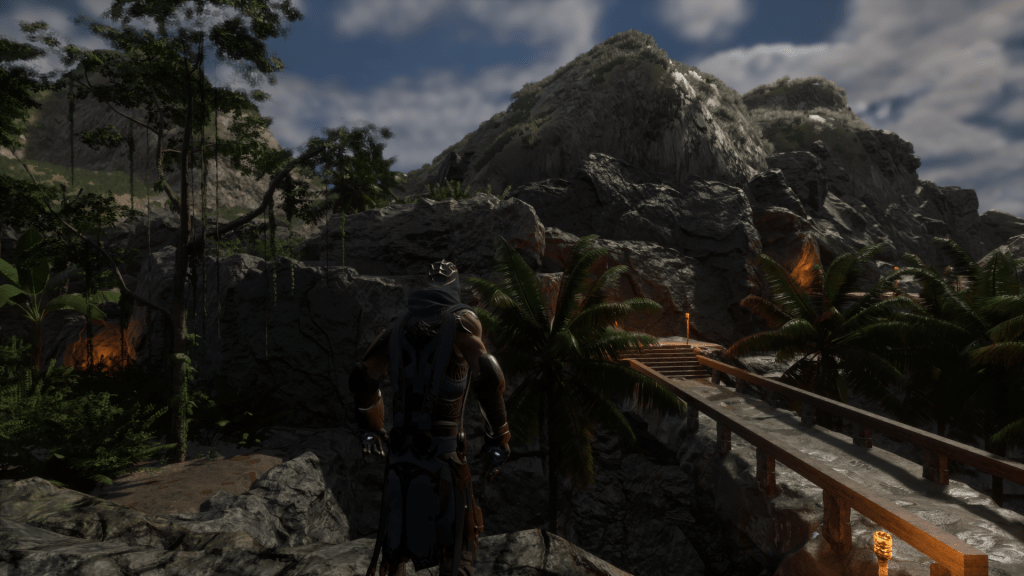
My level was a tropical island, somewhat inspired by Sea of Thieves. The concept of the playthrough was that the player had to find three keys on the island in order to unlock a treasure chest hidden in a vast cave system. My level was the final level before the Lodge, which was the ending point of the game. Also, the level builds upon of the blockmesh that I created last month, which I detailed in the previous post (I encourage you to check that out if you haven’t).
Here is a video of the playthrough of the complete project. In the video, I go more into depth about my level, design concepts, inspirations behind it, and the parts that I am proud of. Note that my part begins at 6 minutes and 40 seconds into the video (6:40).
What Went Right?
The first thing that went right was the fact that I already knew my teammates from a previous project. This meant that we already had a good grasp on each other’s skills, weaknesses, time restraints, and personalities. Also, we created a very great project that we were all proud of, so we were all excited to work together again to create something new. One of my biggest worries when working with a team is poor communication and conflicts of interest leading to arguments. However, I’m glad to say that none of that happened this month with my team.
Building on that, our team communication went really well. The second we got assigned to the project, our team was in a discord discussing plans for the level and when we each could do our parts on the project. We were able to communicate the best possible ways to connect our levels and the overall layout of the project within the first day or two. Additionally, whenever issues emerged, we would communicate them and help each other out when we could. Once again, this may not have been the case if I had gotten randomly assigned team mates, so I am glad that I was able to have reliable ones.
Although it was one of the largest scale projects that I’ve worked on so far, I was very successful in getting my work done on time. I attribute this to entering a flow state while working on my level. Once I had all of my needed assets (which I will discuss later), and a clear goal for what I would be doing during the work session, I found myself cranking it out effortlessly. Before I knew it, eight hours would pass and it felt like I was doing something fun while getting satisfying results. Entering that flow state helped me complete the project early, as I was able to remain very focused on the task at hand.
When starting this project, I’d be lying if I said that I had retained all of my knowledge perfectly from previous courses. There were a lot of essential level and game design concepts that I had somewhat forgotten about. However, it did not take me long at all to readjust to using those concepts and utilizing them to get the desired look and feel for the level. Some of these include landscaping, level sequence animations, tweaking materials, asset migration, and lighting concepts. It also helped that some of those concepts were being re-solidified in my mind by ongoing course content. Once I got the hang of those concepts again, I was very successful at implementing them, and overall it was a great refresher to get to use those tools again.
The next thing that went right was that I already had a solid creative vision that I stuck to throughout the entire project. With an exception to one thing that I will mention later on, I stuck to my creative vision from the previous month and only expanded on it. I attribute this to having a solid blockmesh level already created, which I was proud of. This helped me to enter a flow state as stated earlier, due to already having a goal for how the level should look. On top of that, I already had reference images of real world places that I could use to ensure a realistic look for the level. Essentially, I was replacing things I had already put in blockmesh more than I was trying to come up with new ways to make the level better, which helped out in the long run.
What Went Wrong?
Although having a solid blockmesh, as well as good reference photos, from last month helped out a lot, there were some things from last month that hindered the project. Overall, there were some restrictions and guidelines for our level design from last month that we had to follow. For example, we couldn’t have playable areas be larger than a certain size, we had to follow a certain creative vision, and we couldn’t add any gameplay elements or functionality. Also, we had to limit the playtime to be within two to four minutes, among many other things. Although these restrictions were set in place to make sure we weren’t getting too ambitious, it did hinder some creativity.
There was also one restriction in particular from this month’s course that ended up causing a bit of trouble for me. This restriction was that the levels had to connect seamlessly to each teammate’s. Now, although this is a completely understandable restriction and in my opinion necessary, I did not have this restriction in mind when creating my blockmesh in the previous month. My blockmesh level began on a pirate ship beached on an island, which complicated the concept of having the level before me connect to mine. Additionally, my level ended by looping back to the pirate ship once the player had found the treasure. Overall, my level was not designed with the intention of having another level connected to it, and my creative idea of having the level be a remote island ended up biting me. Luckily, I came up with the idea to have my pirate ship start on a dock on the level before mine and use a level sequence to sail to my island. Although the teammate before me didn’t have his level end with a dock or on an ocean, he was generous enough to make a wonderful dock that my ship could rest at before my level.
This was the first time that I had fully fleshed out a level from a pre-alpha stage to gold, so it took some getting used to. In my past level design experiences, I just went straight in and added static meshes to a scene with a vision in mind. Additionally, I had never designed a level as big as mine, and with so many different and unique areas. It ended up being very time consuming and I often wouldn’t know where to go or what to do next. Due to it being my first experience, I felt a creative block at times.
The creative block didn’t help with coming up with innovative solutions when I couldn’t find assets that would fit within the level. Although there are countless asset packs out there, I was trying to do this level without buying any. Relying on free assets, or pre-owned assets, could only get me so far. Additionally, one of the restrictions from this course was that I could not use megascans (or anything from the Quixel marketplace for that matter), or migrate entire asset packs into the project. While I understand why this restriction was in place, it made it more challenging to find the right assets for my level. Realistically, I don’t think this hindered me all that much, as I feel like I did a good job at using the assets I had to make the level feel as immersive as possible. With that being said, it still took a lot of time to find and import the assets that I did end up using.
My final complication was with source control, or Perforce in particular. This was the first time that I had ever used source control within Unreal Engine. The concept was completely new to me and it took some getting used to before I felt confident enough to use it without looking at guides or tutorials. Source control in general was vital for the creation of this project, but it being such a new concept to us complicated things and created some issues with other teammates that we had to use valuable time to resolve. On top of that, I had my fair share of personal issues with it as well.
Despite those complications, it ended up being an invaluable experience, and I am very proud of how everything turned out. Many things may have gone wrong, but they were all learning experiences that only improved on my knowledge and experience as a game designer. The opportunity to take multiple people’s level and combine them into one playable game was a very useful concept to learn, as I’m sure it is a concept commonly used in the industry. Also, learning source control and getting the hang of concepts like version control, change lists, and a larger scale of level design were vital things for me to understand for my future as a game designer. Once again, I can’t be more happy with how my level turned out, as well as the project as a whole.
Conclusion
Despite those complications, it ended up being an invaluable experience, and I am very proud of how everything turned out. Many things may have gone wrong, but they were all learning experiences that only improved on my knowledge and experience as a game designer. The opportunity to take multiple people’s level and combine them into one playable game was a very useful concept to learn, as I’m sure it is a concept commonly used in the industry. Also, learning source control and getting the hang of concepts like version control, change lists, and a larger scale of level design were vital things for me to understand for my future as a game designer. Once again, I can’t be more happy with how my level turned out, as well as the project as a whole.
 Jesse Aldredge - Game Designer